If you own a home in Denver and your roof is approaching the point where repairs no longer seem practical, figuring out what a replacement will cost can be frustrating. One roofing estimate may be noticeably higher than another, material choices can change the price quickly, and a roof that looks fairly straightforward from the driveway may reveal damaged decking, deteriorated flashing, or ventilation problems once the old roofing is removed.
Denver adds another consideration: severe weather. Hail, snow, strong sun, temperature swings, and seasonal storms can all affect roofing materials over time. As a result, the new roof cost in Denver depends on considerably more than the square footage of the house. The roof’s actual surface area, slope, material, existing condition, accessibility, tear-off requirements, permits, and storm damage can all influence the final price.
Understanding those variables before requesting a roof replacement estimate makes it much easier to compare proposals and determine whether you are looking at a fair scope of work rather than simply choosing the lowest number.
Quick Answer: How Much Does a New Roof Cost in Denver?
As a general planning benchmark, current 2026 consumer cost data places many Denver roof replacements at roughly $4 to $11 per square foot, while Denver asphalt shingle projects can range from around $8,000 to $25,000 or more depending on roof size, materials, pitch, removal requirements, and other conditions. These figures should be treated as budgeting ranges rather than quotes.
A smaller, simple asphalt shingle roof with good decking may fall toward the lower portion of Denver roofing prices. A large home with steep slopes, several roof sections, premium shingles, extensive flashing, or damaged sheathing can cost considerably more. Metal roofs and specialty systems may also require a larger investment.
The only reliable way to determine the actual roof replacement cost in Denver for a specific property is through an inspection and written estimate that clearly defines the scope of work.
Typical Factors That Affect Denver Roof Replacement Costs
Roof replacement is not priced using the home’s living square footage alone. Roofing contractors generally evaluate how much roofing material is actually needed, how difficult the roof is to work on, what materials will be installed, and what needs to be removed or repaired first.
Several factors can influence the cost to replace a roof in Colorado:
- Total roof surface area
- Roof pitch and number of slopes
- Asphalt, metal, or specialty roofing material
- Number of existing roofing layers
- Decking or sheathing condition
- Chimneys, skylights, valleys, dormers, and roof penetrations
- Flashing and ventilation requirements
- Tear-off and disposal
- Jobsite accessibility
- Permit requirements
- Hail or wind damage
- Insurance coverage and deductible
- Residential versus commercial roofing systems
These details explain why two homes that appear similar from the street may receive very different estimates. A properly prepared Denver roofing estimate should account for the actual roof rather than relying only on the property’s advertised square footage.
Roof Size, Pitch, Accessibility, and Architectural Complexity
Roof size is one of the biggest pricing factors because larger roofs require more shingles or roofing material, underlayment, flashing, fasteners, disposal capacity, and labor. Roofing is often measured in “squares,” with one roofing square representing 100 square feet of roof surface.
However, size is only part of the equation. A simple gable roof can usually be completed more efficiently than a roof with numerous valleys, dormers, intersecting slopes, skylights, chimneys, or multiple elevations. Each transition requires additional cutting, flashing, waterproofing, and installation time.
Pitch also matters. Steeper roofs may require additional safety equipment and slower installation procedures. Accessibility can increase complexity as well. Limited driveway access, closely spaced neighboring structures, landscaping, decks, or difficult material staging areas may require crews to spend additional time moving materials and removing debris.
These are practical reasons why a roofing company in Denver may need to inspect the property before providing dependable pricing.
Asphalt Shingles Versus Metal and Other Roofing Materials
Material selection can significantly change the total cost of a new roof.
Asphalt shingles remain a common option because they provide a balance between installation cost, appearance, availability, and performance. Current Denver cost information shows that the asphalt shingle roof cost in Denver varies substantially depending on whether the homeowner chooses basic shingles, architectural shingles, designer products, or impact-resistant options.
Metal roofing generally carries a higher initial cost. Current Denver consumer pricing data shows metal installations costing more than typical asphalt systems, although exact pricing depends on metal type, panel system, roof design, and installation requirements.
Denver homeowners may also encounter options such as composite, tile, slate, or specialty products. Instead of comparing materials purely by price, consider:
- Expected performance in Denver weather
- Hail resistance
- Manufacturer installation requirements
- Roof structure and weight limitations
- Appearance
- Maintenance needs
- Repairability
- Long-term ownership plans
Because hail is a legitimate consideration along Colorado’s Front Range, homeowners comparing shingles may also want to review independent hail-resistant roofing research from the Insurance Institute for Business & Home Safety. IBHS tests roofing products under simulated hail conditions and provides guidance that can help property owners understand impact resistance beyond marketing labels.
Tear-Off, Disposal, Decking Repairs, Flashing, and Ventilation
A roofing estimate should account for more than the shingles you see from outside. Some of the most important components of a roof are underneath or around the finished roofing material.
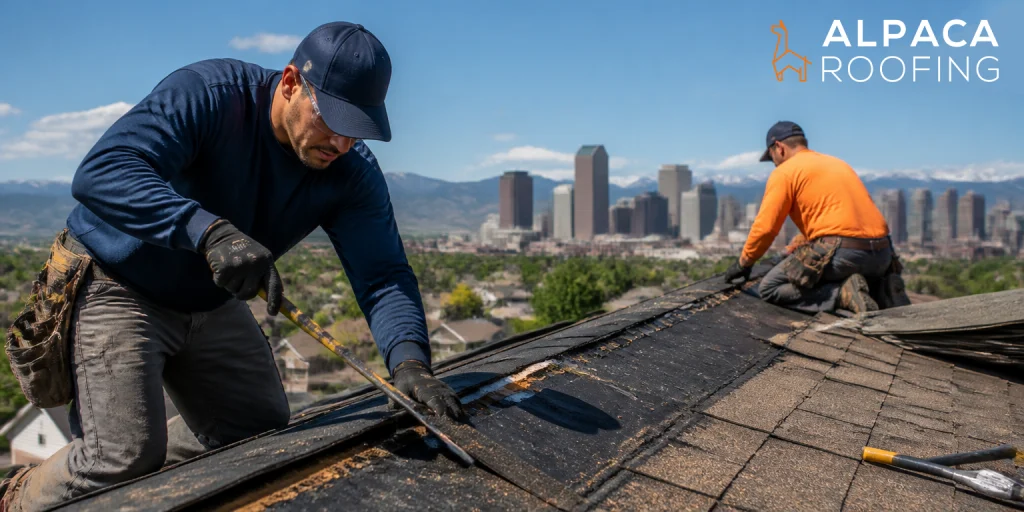
During a replacement, the existing roof may need to be removed and transported for disposal. Once that material comes off, the roof deck becomes visible. Contractors may discover deteriorated, soft, or damaged sheathing that could not be accurately assessed beforehand. Those areas typically need to be addressed before the new system is installed.
Flashing is another important consideration. Chimneys, valleys, walls, skylights, vents, and other roof penetrations rely on correctly installed flashing to direct water away from vulnerable transitions. Likewise, attic and roof ventilation can affect moisture management and overall system performance.
This is why an unusually low quote deserves a closer look. Ask whether tear-off, disposal, underlayment, flashing, ventilation components, and potential decking replacement are included. A lower estimate that leaves several necessary items as later charges may not remain the lowest estimate once the project begins.
If the underlying roof is still in generally good condition and the problem is isolated, professional roof repair services may sometimes be more appropriate than replacing the entire system.
Permit and Inspection Costs in Denver
Permitting should also be accounted for when evaluating how much a roof costs in Denver.
According to the City and County of Denver, new roofs require a roofing permit. Roof repair or replacement involving more than 10% of the roof area or two roofing squares, whichever threshold is smaller, also requires a permit. Roofing permits are handled separately from general construction permits.
Homeowners can review the city’s current Denver roofing permit requirements before beginning a project.
There is not one universal permit price that applies to every roofing project. Denver assigns project fees according to applicable fee schedules and project details. The city’s building and development fee information is the better resource for current requirements rather than relying on an old roofing cost article or a generic national estimate.
When comparing quotes, ask whether permit-related costs and required inspections are already included.
Current 2026 consumer estimates suggest many Denver replacements fall around $4 to $11 per square foot, although total project costs vary substantially. Roof size, materials, slope, tear-off requirements, decking condition, flashing, ventilation, accessibility, and permit requirements all affect final pricing.
Larger roofs, steep pitches, complicated rooflines, difficult access, premium materials, multiple existing layers, damaged decking, flashing replacement, ventilation work, and numerous roof penetrations can all increase the project cost.
Asphalt shingles are generally one of the more accessible residential roofing options, but pricing varies by shingle type and roof configuration. Current Denver consumer data places complete shingle projects across a broad range, so homeowners should use online averages only for early budgeting.
How Hail Damage and Insurance Can Affect Out-of-Pocket Cost
Denver-area roof replacements frequently involve another question: Is the roof simply aging, or was it damaged by a covered storm?
Hail can damage shingles, metal roofing, flashing, gutters, vents, and other exterior components. However, seeing hail in your neighborhood does not automatically mean your roof needs replacement or that an insurance company will approve a claim. Damage should be evaluated based on the actual condition of the roof.
If insurance is involved, your out-of-pocket expense may depend on your deductible and the settlement terms of your policy. Colorado’s Division of Insurance has specifically advised homeowners to review wind and hail deductibles, noting that some policies use deductibles calculated as a percentage of the home’s coverage rather than a simple flat amount.
Another important distinction is actual cash value versus replacement cost coverage. Actual cash value generally accounts for depreciation, while replacement cost coverage is designed around replacing covered property without the same depreciation deduction, subject to the policy’s specific terms and claims process. The National Association of Insurance Commissioners explains the difference between ACV and replacement cost in more detail.
Before assuming insurance will pay for a new roof, review the policy and speak directly with the insurer or insurance professional responsible for the policy.
Why Estimates From Different Denver Roofers Can Vary
Getting three roofing estimates does not necessarily mean receiving three prices for the same project.
One Denver roofing company may include full tear-off, new underlayment, flashing replacement, ventilation improvements, cleanup, disposal, permits, and upgraded shingles. Another estimate may assume some existing components will remain in place.
Labor approach, material specifications, supplier pricing, scheduling, roof measurements, and how contractors account for possible decking repairs can also affect a proposal.
Therefore, comparing only the final number can be misleading. Instead, compare the scope line by line.
A useful estimate should make it reasonably clear:
- What roofing system is being installed
- What specific material or product level is proposed
- Whether removal and disposal are included
- What underlayment will be installed
- How flashing will be handled
- Whether ventilation changes are anticipated
- How damaged decking will be priced
- Whether permit costs are included
- What cleanup is included
- What happens if additional damage is discovered
The goal is not necessarily to find the cheapest roofing contractor Denver homeowners can hire. It is to determine whether each company is pricing the same job.
Commercial Roof Replacement Costs in Denver
Commercial roofing should generally be evaluated separately from residential pricing.
The commercial roof replacement cost Denver property owners receive can depend on the existing system, roof area, drainage, insulation, penetrations, mechanical equipment, accessibility, membrane type, tear-off requirements, and whether portions of the building must remain operational during construction.
Low-slope commercial systems also use different materials and installation methods than typical residential asphalt roofs. Because of that, residential cost-per-square-foot figures are not particularly useful for budgeting a commercial project.
Commercial property owners should request a project-specific evaluation from a provider experienced with commercial roof replacement rather than using residential pricing as a baseline.
Questions to Ask When Comparing Roofing Estimates
Before choosing a roofing contractor in Denver, ask each company similar questions. Doing so creates a much more useful apples-to-apples comparison.
Consider asking:
- Is this estimate based on measured roof area or home square footage?
- Is full tear-off included?
- What exact roofing material is being installed?
- What happens if damaged decking is discovered?
- Are flashing and roof penetrations included?
- Is ventilation being evaluated?
- Are permits and inspections included?
- How will the property be protected during tear-off?
- What cleanup and disposal are included?
- Are there potential additional charges that are not included in this estimate?
- What manufacturer requirements apply to the selected roofing system?
- What documentation will I receive when the project is complete?
A detailed estimate should make it easier to understand what you are purchasing and why the price differs from another proposal.
When Should You Contact a Qualified Roofing Professional?
Roof inspections and replacements involve heights, potentially unstable surfaces, hidden structural damage, and weather-related hazards. Homeowners should generally avoid climbing onto a roof to evaluate hail impacts, leaks, loose shingles, or suspected decking problems themselves.
Contact a qualified professional if you notice interior water stains, missing shingles, visible storm damage, sagging areas, damaged flashing, persistent leaks, or repeated repair problems. A professional evaluation can help determine whether you need a targeted roof repair, a full replacement, or a new roof installation.
This is particularly important after hail. Some damage is difficult to evaluate safely from the ground, while unnecessary replacements can also be expensive. A physical inspection provides better information than guessing based on the age of the roof or what happened to neighboring homes.
Getting an Affordable Roof Replacement in Denver Without Choosing on Price Alone
For homeowners searching for an affordable roof replacement in Denver, reducing cost should not mean removing important parts of the roofing system.
A better approach is to compare material levels, understand which upgrades are optional, confirm the scope, and ask about ways to budget the project responsibly. For example, upgrading to the most expensive designer shingle may not be necessary for every home, while properly installed underlayment, flashing, ventilation, and decking repairs should not be treated as cosmetic upgrades.
Property owners who prefer to spread the project cost over time can also review available roofing financing options before deciding how to proceed.
Ultimately, the most useful Denver roofing estimate is one that clearly explains where the money is going.
Get a Roof Replacement Estimate Based on Your Actual Home
Online Denver roofing prices are useful for establishing a budget, but they cannot account for every roof’s size, pitch, material, condition, storm history, or architectural layout.
If your roof is aging, leaking, damaged by hail, or becoming increasingly expensive to repair, the next step is to have the property evaluated and receive a project-specific scope. You can contact Alpaca Roofing to request a roofing estimate and determine what your roof actually needs before making a replacement decision.